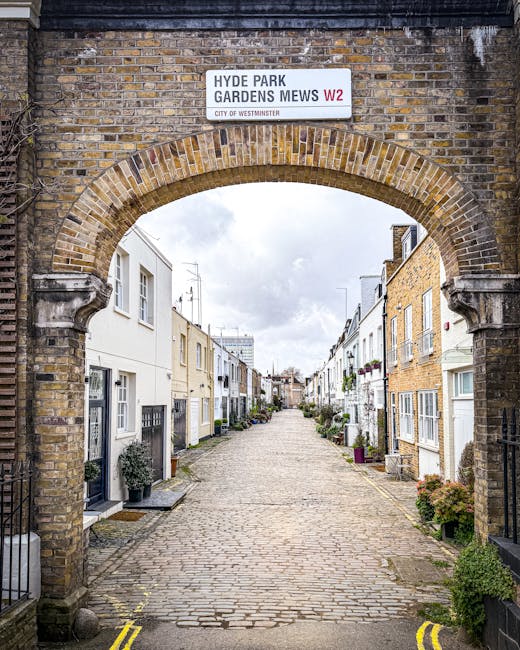
Narrow Street Rubbish Collection Solutions for Brompton Mews
Narrow streets are charming right up until it is time to move waste out of them. Brompton mews can be especially awkward: tight access, parked cars, shared entrances, awkward corners, and neighbours who quite understandably do not want bins, bags, or bulky waste blocking the lane for half the morning. That is exactly where narrow street rubbish collection solutions for Brompton mews come into their own. The right approach is not just about clearing waste quickly. It is about planning the access, protecting the street, keeping disruption low, and making sure everything leaves safely and legally.
In this guide, you will find a practical, no-nonsense breakdown of how these collections work, what to expect, what to avoid, and how to choose the best method for mews properties, flats, and small businesses in a restricted access setting. If you have ever stood in a lane with a sofa that will not fit round the turn, you will know the feeling. Bit of a faff, to be fair - but very solvable.
Why Narrow Street Rubbish Collection Solutions for Brompton Mews Matters
Mews streets are often beautiful, but beauty and efficiency do not always get along. A narrow access route changes everything about rubbish collection. What might be a simple lift-and-load job on a wide road can become a careful sequence of timing, carrying, stacking, loading, and handover in a restricted lane.
Why does that matter so much? Because the wrong approach can cause avoidable problems fast: blocked access for residents, damaged walls or railings, upset neighbours, wasted labour time, and in some cases a collection that simply cannot be completed on the day. On a narrow street, one poor decision can ripple through the whole job.
This is particularly relevant in Brompton mews where properties are often close together, parking is limited, and there may be shared spaces or irregular access routes. You are not just dealing with waste. You are dealing with logistics, courtesy, and timing.
There is also the practical side. Rubbish can build up quickly after a refurbishment, a flat clearance, or a business tidy-up. If it sits too long in a tight street, it starts to feel like clutter rather than waste. It gets in the way, looks worse, and can create safety issues for people walking through the area. A good collection solution prevents that from becoming a bigger problem than it needs to be.
Expert summary: In narrow mews streets, the best rubbish collection solution is rarely the fastest-looking one on paper. It is the one that combines access planning, safe manual handling, sensible scheduling, and a clean exit route.
If you are comparing options, it can help to look beyond price alone. A service that understands tight-access collection will usually save time, stress, and the sort of last-minute improvising nobody enjoys.
How Narrow Street Rubbish Collection Solutions for Brompton Mews Works
In practice, narrow street rubbish collection is a structured process. The exact method depends on the waste type, the amount, and how much room there is for vehicles or loading. But the core idea stays the same: reduce disruption, move waste in manageable stages, and use the access available as efficiently as possible.
Typical working method
- Assess the access - note the width of the street, nearby parking, entry points, steps, gates, and any obstacles such as low walls or tree branches.
- Identify waste types - separate general rubbish from heavy items, furniture, builders' waste, or mixed loads.
- Plan the loading point - decide where bags and items can be staged without blocking the street.
- Use manual loading where needed - in narrow mews lanes, smaller loads are often carried by hand or wheeled in low-profile equipment rather than relying on large vehicles at the property door.
- Remove and sort responsibly - recyclable materials are separated where possible, and reusable items are treated accordingly.
- Clear the area and check for leftover debris - a proper finish matters. Nobody wants a clean skip-sized gap with a scatter of screws and packaging left behind.
For a Brompton mews property, this might mean a crew arriving in a smaller vehicle, loading from a nearby point, or coordinating around parking restrictions and pedestrian flow. In some cases, a larger lorry never makes sense at all. That is not a weakness. It is simply the right tool for the street.
Depending on the load, the service may be suited to general waste removal, a property clearance such as flat clearance, or a more specialised job like furniture disposal. For mixed household items, home clearance or house clearance may be the more practical route.
The best operators tend to ask a few sensible questions before the visit. Is there a loading bay? Can a van stop briefly? Are the items coming from a basement, upper floor, or rear courtyard? Those details sound small, but they decide whether the job feels smooth or messy.
Key Benefits and Practical Advantages
People usually think about rubbish collection as a simple one-time task. In narrow streets, though, the benefits of the right solution are broader than just getting things out the door.
- Less disruption for neighbours - a properly planned collection avoids unnecessary blockages and awkward roadside pile-ups.
- Safer handling - narrow areas often mean more carrying, tighter turns, and more opportunity for slips or knocks if the load is not managed well.
- Better protection for property - careful teams are less likely to scrape paintwork, damage paving, or clip entrances.
- More reliable timing - a realistic plan is more likely to finish in one visit, which matters when access is limited.
- Cleaner presentation - useful for landlords, managing agents, small businesses, and anyone trying to keep a mews property looking tidy.
- Suitable for awkward waste types - not everything is bagged household waste. Some jobs involve bulky pieces, mixed clutter, or light construction debris.
There is another advantage that people do not always mention: peace of mind. If you know the waste will be dealt with carefully, you stop worrying about whether the van will block the lane, whether the bins will overflow, or whether the neighbours will complain. That alone is worth a lot on a busy day.
For heavier or messier loads, it may make sense to pair the collection with a more focused service such as builders waste clearance or a specialist clear-out like garage clearance. If the waste is business-related, business waste removal can be a better fit.
Who This Is For and When It Makes Sense
Narrow street rubbish collection solutions for Brompton mews are useful for a surprisingly wide range of people. Some jobs are one-off and urgent. Others are planned well ahead. Either way, the access challenge tends to be the same.
Common situations where this approach makes sense
- Flat and mews residents clearing household waste, old furniture, or accumulated clutter.
- Landlords and letting agents dealing with end-of-tenancy rubbish or partial property clearances.
- Homeowners after refurbishment, decluttering, or a room reconfiguration.
- Small offices or studios needing discreet waste removal without disrupting the street.
- Tradespeople removing renovation debris from a tight access site.
- Residents with limited lifting ability who cannot realistically move items to a distant loading point themselves.
It also makes sense when the waste is awkward rather than huge. A few broken chairs, a mattress, several bags of packaging, a wardrobe, some old shelving, maybe a bath panel and a pile of offcuts - not dramatic, just annoying. Those are the jobs where the right collection approach saves a lot of back-and-forth.
Truth be told, if you are already thinking, "I can't quite see how this will fit out of here," that is usually the sign you need a narrow-street solution rather than a standard collection setup.
Step-by-Step Guidance
Here is a practical way to approach rubbish collection in a Brompton mews setting without overcomplicating it.
1. Walk the route first
Look at the access with fresh eyes. Where can a vehicle stop? Where would the waste be staged? What would a person carrying a bulky item actually have to do to get it out? A two-minute route check can prevent a lot of head-scratching later.
2. Separate the waste into simple groups
Keep general rubbish, recyclables, bulky items, and heavier debris apart if possible. Even a rough separation helps the collection crew load more efficiently. If everything is mixed into one unhappy heap, the job takes longer. Simple as that.
3. Measure the awkward pieces
If there is furniture involved, note the height, width, and depth. A sofa or wardrobe may look manageable indoors and then become stubborn at the last bend. It happens all the time. Very annoying, but predictable.
4. Decide whether the load needs a service match
A general collection is fine for mixed rubbish, but specialist services are often better for specific materials. For example, old domestic furniture may be suited to furniture clearance, while clutter from a loft may be better handled through loft clearance.
5. Agree the loading point and timing
On a narrow street, timing matters almost as much as the waste itself. Early morning may be calmer. Midday may be busier. If parking is tight, even a short delay can turn into a genuine access issue. Try to keep the collection window realistic.
6. Clear the route before the crew arrives
Move bikes, planters, loose bins, and anything else that could trip someone or block the hand-carry path. A clear path makes the whole collection feel quicker and safer. And yes, it is one of those small jobs that saves more time than you expect.
7. Check the finish
When the waste is gone, take a minute to inspect the area. Look for small debris, packaging straps, broken bits, or anything left in the corner by the gate. In a mews street, that last tidy-up matters. It is the difference between "done" and "properly done."
Expert Tips for Better Results
A few practical habits make narrow street collections smoother almost every time.
- Use smaller staging piles instead of placing everything at once in the street. It keeps the space usable and reduces clutter.
- Protect the path with simple coverings if you are moving items over delicate floors or stone thresholds.
- Keep one person in charge of access so nobody is opening gates, shifting cars, and answering questions all at the same time.
- Reserve your hardest items for first if space is tight. Once the biggest object is out, the rest usually feels easier.
- Communicate with neighbours early if the collection may affect parking or passage. A polite heads-up can prevent awkwardness later.
- Ask about recycling in advance if you care about material separation. It is much easier to plan for it than to hope it happens by magic.
A small but useful observation: collections in narrow streets often go better when people understate the complexity rather than overpromise. If someone says, "Oh, it'll be fine," and then a vehicle cannot turn, everybody feels it. Better to be honest from the start.
If your waste stream includes mixed items and you want a more environmentally considered approach, look at the provider's recycling and sustainability information. If you are comparing prices, the page on pricing and quotes is a sensible place to understand how jobs are usually assessed.
Common Mistakes to Avoid
Most access problems are avoidable. The trouble is they are also easy to underestimate when you are busy.
Leaving the route planning too late
If the crew arrives and has to ask where the waste is, where it will be staged, and whether a van can stop for three minutes, you have already lost time. Narrow street jobs need a plan before the day, not during it.
Assuming a standard vehicle will fit
Big vehicle, narrow lane, awkward turn. Not ideal. Sometimes the right answer is a smaller vehicle, a different loading point, or a manual carry system from the property to the vehicle.
Mixing everything together
If builders' rubble, old furniture, and general household junk are all thrown into one pile, loading slows down. Separate what you can, and the job becomes cleaner and easier.
Ignoring neighbour impact
Even a short blockage can frustrate people trying to get in or out. Let people know what is happening if the street is especially tight. A little courtesy goes a long way here.
Forgetting about safety at the doorway
Door thresholds, stairs, and wet paving can be risky. The narrowest part of the job is often not the street itself but the last few steps out of the building.
Trying to save time by overloading bags
Heavy bags are harder to move and more likely to split. In a mews lane, a split bag is nobody's friend. Keep loads manageable.
Tools, Resources and Recommendations
You do not need specialist equipment for every collection, but the right basics make a noticeable difference.
| Tool or Resource | Why It Helps | Best For |
|---|---|---|
| Heavy-duty sacks or containers | Reduces splitting and helps organise mixed waste | General rubbish, packaging, light clear-outs |
| Furniture straps | Improves grip and control when carrying bulky items | Sofas, chairs, wardrobes, cabinets |
| Protective coverings | Helps protect floors and thresholds from scuffs | Internal moves through tight access points |
| Hand truck or compact trolley | Makes short-distance moves more efficient | Loaded bags, boxes, smaller appliances |
| Waste segregation labels | Keeps recyclable and non-recyclable items apart | Mixed loads, office tidy-ups, refurbishment waste |
If the job includes office furniture, paperwork, or old fittings, office clearance can be more suitable than a general rubbish run. For heavier household clearances, home clearance is often the better fit. And if the waste is particularly bulky or awkward, ask whether furniture disposal or a wider waste removal service is the cleanest match.
One small recommendation: keep a short written list of what is going, what is staying, and what needs careful handling. It sounds basic, but it stops the classic "Wait, that chair was meant to stay" moment. We have all seen that sort of thing happen.
Law, Compliance, Standards, or Best Practice
For rubbish collection in the UK, the main principle is straightforward: waste must be handled responsibly, safely, and in line with current expectations for lawful disposal. In a Brompton mews setting, the practical side matters just as much as the paperwork.
That means using a service that is organised, careful, and clear about where the waste goes. If a collection includes mixed materials, bulky items, or anything that could be reused or recycled, best practice is to separate it where practical and avoid contamination. It also means thinking about manual handling, safe lifting, and protecting public access while the work is underway.
For homeowners, landlords, and businesses alike, the safest approach is to choose a provider that is transparent about its processes. If you are sharing a building or working from premises with tenants, it is wise to agree access and timing in advance. That is not legal advice, just common sense - the kind that saves awkward conversations later.
Safety and trust matter too. It can help to check a provider's health and safety policy, review their insurance and safety information, and understand their terms through the terms and conditions. If the service is used for a business address, business waste removal should be handled with extra care around access, record-keeping, and timing.
You do not need to turn the whole thing into a legal project. But a little diligence now is far easier than sorting out a messy collection later.
Options, Methods, or Comparison Table
There is no single right answer for every narrow street. The best choice depends on how much waste you have, how heavy it is, and how tight the access actually is.
| Method | Best For | Pros | Limitations |
|---|---|---|---|
| Manual carry-and-load | Very narrow mews streets and short access routes | Flexible, precise, low-disruption | Slower for larger volumes |
| Small van collection | Mixed domestic waste and light bulky items | More adaptable than larger vehicles | May still need nearby stopping space |
| Specialist clearance | Furniture, loft, flat, or house clearances | Better for complex or multi-room jobs | Requires clearer planning upfront |
| Builders' waste service | Renovation debris and heavier materials | Suited to mixed construction waste | Not ideal for general household clutter |
For a Brompton mews property, the first question should usually be: what actually fits the street? After that comes the load type. A smaller method that fits the setting often beats a larger one that creates hassle.
For instance, if you are clearing after decorating, builders waste clearance may be the right choice. If you are simply decluttering a compact home, then house clearance or flat clearance might be more appropriate. And if the job is mainly old outdoor items or overgrown storage, garden clearance or garage clearance may fit better than a broad-brush rubbish run.
Case Study or Real-World Example
Picture a mews property with a rear access lane, two residents trying to leave for work, and a collection of mixed waste: two armchairs, several bags of general rubbish, a dismantled shelving unit, and a few boxes of renovation offcuts. Nothing huge, but enough to become a problem if handled badly.
The first instinct might be to bring in a large vehicle and get everything done quickly. But the lane is tight, turning is awkward, and parked cars leave only a narrow passage. So the better approach is to stage the waste just inside the entrance, clear the path, and use a smaller load-out sequence. Bulky items come out first, bags follow, offcuts are kept separate, and the team checks the area at the end for loose screws and splinters.
The job takes a bit more thought than a standard street-side collection. But it finishes cleanly, no one is blocked in, and the property is left tidy. That is the kind of outcome people usually want, even if they do not say it out loud.
And yes, the awkward chair made the corner look impossible for a moment. It always does.
Practical Checklist
Use this quick checklist before the collection day.
- Confirm the exact address and access route.
- Identify any gates, steps, tight turns, or low obstacles.
- Separate general rubbish from bulky or heavy items.
- Remove items that must stay before staging begins.
- Clear bikes, bins, and loose clutter from the route.
- Check whether neighbours or building users need advance notice.
- Make sure the loading point is realistic for the street width.
- Keep heavier bags manageable and secure.
- Ask about recycling, disposal, and any special handling needs.
- Do a final sweep for small debris after the collection.
If the job is part of a larger property tidy-up, you may also want to review home clearance options or see whether a more specific service like furniture clearance would be a cleaner fit. For business premises, it is worth checking the provider's about us page too, just to understand who you are dealing with and how they work.
One useful habit: take a couple of photos before the collection if access is tight. Not for drama. Just for clarity.
Conclusion
Narrow street rubbish collection solutions for Brompton mews are all about fit. Fit for the street, fit for the load, and fit for the people living and working there. When access is tight, good planning matters more than brute force. The best results come from clear staging, sensible scheduling, careful handling, and a willingness to choose a smaller or more specialised method when that is the smarter move.
That is especially true in mews properties, where every metre counts and every minute of disruption is noticed. With the right approach, though, a difficult-looking collection can feel surprisingly calm. A bit of preparation, a bit of judgement, and the whole thing is done before anyone has had time to get properly fed up.
If you want a collection that respects your street, your time, and your property, the next step is simple: plan it properly and speak to a team that understands narrow-access work.
Get a free quote today and see how much you can save.
And if you are still deciding, that is fine too. The quiet, tidy solution is usually the best one in a place like Brompton mews.
Frequently Asked Questions
What makes rubbish collection in Brompton mews different from a normal street collection?
The main difference is access. Narrow lanes, limited parking, and tight turns mean the collection has to be planned around the street rather than the other way round. That usually means smaller vehicles, shorter carries, and more careful staging.
Can bulky items be removed from a very narrow mews street?
Yes, in many cases they can. The key is to check dimensions, route, and turning space first. Sofas, wardrobes, and similar items often need a slower, more careful carry-out, but they are usually manageable with the right setup.
Is a skip always the best option for a mews property?
Not always. In some narrow streets, a skip can create more access problems than it solves. A manual collection or smaller vehicle service may be easier, cleaner, and less disruptive.
How do I know whether I need general waste removal or a specialist clearance service?
If the waste is mixed household clutter, general waste removal may be enough. If it is mainly furniture, loft contents, office items, garden debris, or builders' rubble, a more specific clearance service is often better suited.
Will the collection team need to enter my property?
Sometimes yes, sometimes no. It depends on where the waste is located and how the access works. In many narrow-street jobs, the crew may collect from just inside the entrance, a hallway, or a rear access point rather than moving through the whole property.
How can I make the collection faster on the day?
Sort the waste in advance, clear the route, and make sure the loading point is ready. Small things matter here. If the crew can start loading immediately, the whole job tends to move much more smoothly.
What should I do if parking is very limited outside my Brompton mews property?
Tell the provider early. Limited parking is not unusual in mews streets, and a good plan can work around it. The service may need a timed arrival, a nearby stopping point, or a smaller vehicle setup.
Can rubbish collection be arranged for flats and upper-floor homes in mews buildings?
Yes. Flat-based clearances are common, especially where access is awkward. Services such as flat clearance are often the most practical choice for this kind of property.
What happens to the waste after it is collected?
That depends on the type of waste, but responsible providers usually sort materials where possible and aim to recycle suitable items. If sustainability matters to you, ask how the waste stream is handled before booking.
How far in advance should I book a narrow street collection?
For straightforward jobs, a short lead time may be enough, but it is better not to leave it until the last minute if access is tight. If there are parking constraints, neighbour coordination, or bulky furniture involved, booking earlier is safer.
Is this kind of collection suitable for businesses in Brompton mews?
Yes, especially for small offices, studios, shops, or mixed-use premises. Business waste removal can be planned around opening hours and access needs so the street stays usable while the work is done.
What is the biggest mistake people make with narrow street waste removal?
Underestimating access. People often focus on the waste itself and forget the route, the turning space, the parking, and the loading point. In a mews street, those details are the job.