Garden Clearance in Brompton

Garden clearance in Brompton should leave outdoor spaces safe, workable and ready for their next stage, whether that means a tidy back garden, a reset for landscaping or a full removal of accumulated green waste. Our service focuses on practical clearance work carried out with care for the materials involved, from cuttings and branches to old pots, broken fittings and other garden debris that can build up over time. The aim is straightforward: clear the site efficiently, sort what can be reused or recycled, and leave the area easier to manage.
We handle a broad range of garden-related clearance tasks, including seasonal cut-backs, overgrowth removal, hedge offcuts, soil spoilage, timber, plant pots, old compost bags and mixed outdoor rubbish. Where access is tight or the load is awkward, the work is planned around the property layout so items can be removed without unnecessary disturbance. Clearance is not the same as gardening; it is the removal side of the job, and it is often the fastest way to restore order when a garden has become crowded or neglected.
If you want to compare options or prepare a request, the most useful starting point is a brief description of what needs clearing and how much space is affected. You can then decide whether the work is best handled as a focused one-off job or as part of a wider property clearance plan. Ask for a quotation when you are ready, and keep the brief simple so the response can reflect the actual scope rather than a guess.
Garden Waste Removal and Green Material Sorting
Garden waste removal usually begins with separating green material from general outdoor rubbish so the right handling route can be chosen for each load. Fresh cuttings, leaves, soil, turf and small branches may be suitable for recycling or composting routes, while broken planters, plant supports, garden furniture parts and general rubbish often need different treatment. That sorting stage matters because it helps keep the service organised and avoids mixing materials that could otherwise be recovered. It also means the clearance can be adapted to gardens that contain both natural waste and hard waste.
Our approach is suited to gardens that have been left after pruning, redesign work, weather damage or simple build-up over a long season. We can clear scattered debris as well as heavier accumulations gathered in corners, along fences or behind sheds. If you have bulky organic waste such as hedge trimmings or long branches, those can be assessed alongside smaller bagged material so the collection is planned as one coherent task. Garden clearance remains the core service, but the method is shaped around the mix of waste on site rather than a fixed routine.
What is commonly removed
Typical items in this kind of work include cut branches, grass cuttings, roots, weeds, broken trellis, old compost, damaged edging, plant pots, bagged soil and seasonal debris. Where a garden has been partly dismantled or prepared for renovation, there may also be disused timber, old sleepers, cracked paving fragments or leftover materials from minor outdoor repairs. Each load is judged on what it contains, because that affects lifting, sorting and disposal. The result is a clearance process that deals with the actual condition of the garden, not just the visible top layer.
Overgrown Garden Clearance for Neglected Outdoor Spaces

Overgrown gardens need more than a quick tidy when brambles, saplings, weeds and heavy growth begin to dominate paths or borders. Clearance work in that situation is about reducing the bulk, opening up access and taking away the waste created as growth is cut back. It often includes a mixture of living material and older debris hidden underneath it, so the task can be more involved than a standard garden collection. This is where a structured clearance makes the difference between a surface-level tidy and a proper reset.
We can clear areas that have become difficult to use, including narrow side passages, enclosed courtyards, rear plots and gardens that have not been maintained for some time. The work may involve stacking or moving cut material in stages so that larger items can be handled safely. When the garden contains dense growth close to fences, sheds or boundary structures, a careful approach helps protect the remaining features while removing the unwanted material. The emphasis is on clear access, safe lifting and tidy disposal.
For customers comparing scope, it helps to think in terms of the space you want back rather than the exact appearance of the waste. Some jobs are mainly green waste; others are mixed outdoor clearances that also include broken items, old coverings or unused garden fixtures. If you are unsure how much needs taking away, a concise note about the areas involved is usually enough to shape a practical quotation request. Keep the request brief and specific, and then decide the next step from there.
Garden Clearance for Renovation, Repair and Replanting
Not every clearance is about neglected ground. Many garden projects begin with a deliberate clear-out before new planting, resurfacing or structural work can start. In that case, the task may involve removing old compost, surplus turf, damaged edging, tired decorative features or materials left behind after previous improvements. A good clearance creates a cleaner working area for the next phase, reducing the chance that old debris interferes with fresh installation or planting layouts.
When a garden is being redesigned, it often helps to remove material in the same order that the next stage will need the space. For example, borders may be stripped first, then central areas cleared, then heavier waste taken away once access improves. That sequencing can make the work feel less disruptive. If you already know which parts of the garden are changing, explain that in your enquiry so the clearance can be aligned with the project rather than treated as a single undifferentiated load.
- Remove old growth before fresh planting begins.
- Clear away discarded materials left after minor garden works.
- Prepare borders, paths and open spaces for the next phase.
- Keep recyclable garden waste separate from mixed rubbish where possible.
Bulky Outdoor Items and Mixed Garden Waste

Garden clearance is often more than organic waste collection. Outdoor spaces can contain mixed bulky items such as damaged furniture, broken plant stands, old fencing sections, disused decorative pieces, storage items and weathered accessories that no longer serve a purpose. These items can be awkward because they are often heavier, dirtier or less regular in shape than loose green waste. Handling them properly means planning the lift, the route out of the property and the final sorting stage together.
We can work through mixed loads in a way that keeps the job orderly. That may involve separating reusable items from waste, grouping lighter materials with heavier objects and removing clutter in a sequence that protects the space around it. A mixed garden clearance is often the right choice where the garden has gradually collected a range of items over several seasons. Waste removal is useful when the outdoor area contains a broader spread of non-garden material alongside the garden debris, and we can discuss the most suitable arrangement for your property.
Some customers want the whole outdoor area dealt with in one visit, while others only need a certain section cleared, such as behind a shed, beside a garage or along a boundary line. Either way, the key is to state what should go and what should stay. That distinction helps avoid confusion and makes the quotation more accurate. If the job includes awkward objects or mixed materials, mentioning them early is usually enough to guide the plan.
Access, Load Size and Practical Planning
Good planning makes garden clearance smoother, especially where access is restricted or the materials are awkward to move. Brompton properties may vary widely in layout, so the clearance approach needs to fit the site rather than rely on a fixed routine. Narrow side returns, shared passages, steps, basement-level exits and enclosed rear gardens all affect how waste is moved. The more precisely the route is understood, the easier it is to estimate the work and handle it without avoidable delays.
We keep the process practical. If a garden contains large branches, dense bags, long pieces of timber or mixed waste that cannot be carried in one neat stack, the load may be broken down into manageable portions. This is not just about convenience; it also helps maintain control when the route out of the property includes corners, changes in level or limited turning space. For a quotation, a simple note on access and volume is often more valuable than a long description. Pricing and quotes can then be discussed around the real shape of the job rather than an assumption.
Useful details to include are the main type of waste, whether the garden is overgrown, whether access is straightforward and whether there are bulky items mixed in with the green material. You do not need a formal inventory for a sensible starting point. A short description, a few clear priorities and any access notes are usually enough to help shape the request. That keeps the process simple while still giving enough information for a useful response.
About Brompton
Brompton is a historic and densely built district in west central London, associated with the Royal Borough of Kensington and Chelsea and with the wider urban fabric of South Kensington and Knightsbridge. Its character has been shaped by layers of nineteenth-century development, from elegant terrace housing to museum buildings and long-established institutions. The area sits within a highly walkable part of inner London where residential streets, commercial frontages and cultural destinations sit close together. Gloucester Road, South Kensington and Knightsbridge are nearby reference points that help define its position in the city. The locality is also closely associated with landmark institutions such as the Victoria and Albert Museum, the Natural History Museum and the Science Museum, all of which sit within the broader South Kensington district and contribute to the area's cultural identity. In architectural terms, Brompton includes a range of stucco-fronted terraces, mansion blocks and later infill development, creating a varied streetscape that reflects different phases of London growth. The neighbourhood name has long been linked with historic road patterns and parish boundaries, and traces of older place identity remain in street names and local references. Open space is limited compared with outer districts, so much of Brompton is defined by streets, squares, museums and nearby garden squares rather than large parks. Its setting within central London means that it connects readily to surrounding districts, yet it still retains a distinct local identity built from its architecture, institutions and compact urban form.
Household Garden Clearance and Adjacent Outdoor Areas
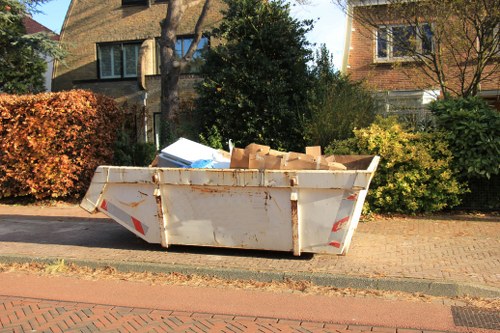
Household garden clearance often runs alongside the clearing of related spaces such as side returns, bin stores, courtyards, small paved yards and access ways leading to the rear of a property. These areas frequently collect the same kind of material as the main garden: old pots, plant cuttings, broken storage items, discarded bags, weathered timber and general outdoor clutter. When handled together, the work creates a more complete reset and avoids leaving small pockets of waste behind the main area. That is particularly useful where outdoor spaces connect into one another.
We can clear material from the garden and from nearby zones that support it, provided the work stays within the agreed scope. If a side passage is filled with bags or a courtyard has become a holding area for unused outdoor items, it is often more efficient to remove those items at the same time as the main garden waste. Home clearance may also be relevant when the outdoor job is part of a broader property clear-out rather than a standalone garden task, and the right choice depends on what is actually being removed.
There are cases where the most sensible route is to split the job into sections, especially if the outdoor waste is mixed with other property items or if access has to be managed carefully. In those situations, a clear list of the spaces included helps everyone understand the boundaries of the work. If you are preparing a request, note which outdoor areas are part of the clearance and which are not. That small step can make the quotation easier to read and the work easier to organise.
Recycling, Disposal and Responsible Handling
Garden clearance produces different materials, and each one needs to be handled according to what it is. Green waste is often suitable for recycling routes, while treated timber, plastics, old household-style rubbish and mixed debris may follow different disposal channels. Responsible handling begins with separating those materials properly, because a well-sorted load is easier to process and less likely to be wasted. That is part of making the clearance both practical and efficient.
The same approach applies to jobs that include a blend of natural and man-made materials. For example, a load may contain hedge cuttings, a broken planter, a damaged hose, a few stones and some unused bags or packaging. Each item type is considered in context so that nothing is placed in the wrong stream unnecessarily. Recycling and sustainability gives further direction on how materials are approached, while the clearance itself is designed to keep the process organised from the start.
Customers do not need to separate every item before asking for help, but it is useful to mention anything unusual, heavy or potentially recyclable. That could include sleeper offcuts, metal edging, large terracotta containers or branches that are bigger than standard garden bags. The more clearly the material mix is described, the more accurately the work can be planned. A well-defined load is simpler to clear and easier to route through the right disposal method.
How to Request a Quote for Garden Clearance

A quote request is usually most effective when it describes the garden in plain terms: what needs clearing, how much of the space is affected and whether there are bulky or awkward items mixed in. If the garden is overgrown, mention whether the task is mainly green waste or whether there is also old outdoor furniture, broken fixtures or debris from another project. The goal is not to write a full report, but to give enough detail for the scope to be understood accurately.
Where possible, include access notes only once rather than scattering them through several messages. A brief note about gates, steps, side passage width or shared access can be enough to prevent confusion later. If you have a preferred timeframe, state it clearly, but keep the request focused on the work itself. The simpler the brief, the easier it is to compare options and decide how to proceed. Clear information makes a clearer quotation, especially when the garden contains mixed materials or multiple areas.
When you are ready, send the details through and ask for a quotation in plain language. If the task is only a small section, say so; if it is a full garden reset, say that too. You can also contact us to discuss the job and arrange the next step. Request your quote today if you want the outdoor space cleared and ready for whatever comes next.
Furniture Clearance and Loft or Garage Links to the Same Project
Sometimes a garden clearance leads directly into other clearance work because the same property contains stored items that also need attention. Old outdoor furniture, disused household pieces, garage overflow and loft contents may all appear in the same wider project. It is sensible to consider those items separately, even when they are being handled alongside the garden, because each area has its own access, handling and sorting needs. That distinction helps keep the work organised and avoids mixing different types of clear-out unnecessarily.
If your outdoor clearance forms part of a larger declutter, the job can be scoped around the most practical sequence. For example, the garden may be cleared first to create room for items moved from a garage, or the garage may be dealt with before the outdoor waste so the loading route stays open. Where the property includes several spaces with different materials, a joined-up plan can help. Furniture clearance is relevant when bulky items need taking away, while garage clearance or loft clearance may fit where the project extends beyond the garden itself.
Not every job needs to be expanded in that way, and it is perfectly reasonable to keep the work focused on the outside space. The important thing is that the quotation reflects the actual scope instead of assuming more than you want cleared. If there are separate zones, say which ones you want included and which ones you do not. That helps keep the service precise and avoids unnecessary additions.
Choosing the Right Scope for a Brompton Garden Clearance
The right scope depends on how the garden is being used and what has built up in it. A light seasonal clear-out may involve little more than collecting cuttings and a few broken items, while a neglected plot may need a much fuller removal of dense growth, mixed waste and hidden debris. Brompton properties can vary in layout and scale, so the most practical service is one that fits the garden as it stands. It is usually better to define the task by the areas and materials involved than by a fixed assumption.
Some customers only need the clearance side of the job, while others want the space cleared before a separate landscaping or repair project begins. Either way, the value lies in making the outdoor area workable again. That may mean opening access to borders, clearing around steps, freeing up a patio edge or removing enough waste to let the next stage begin. If you need to compare options, it can help to group the work into the main load, any bulky extras and any related areas outside the garden. A focused request gives a more useful answer than a vague one.
For a straightforward enquiry, describe the garden, note the main material types and state whether you need a full or partial clearance. Then decide whether the rest of the property should remain out of scope. If you want to discuss the job further, a short message is enough to start the process. Ask for a quotation once you know the space you want cleared, and keep the wording tied to the actual work so the response stays accurate.